
Style. Scent. Modern Living.
How to Choose Your First Fragrance: A Beginner’s Guide.
A beginner-friendly guide to choosing your first fragrance, understanding scent families and fragrance notes, and finding a perfume that suits your preferences, lifestyle and budget.

Buying your first fragrance should be exciting, not confusing. Yet a visit to a perfume counter or an online fragrance store can quickly become overwhelming. Hundreds of bottles to choose from, unfamiliar ingredient names, different fragrance concentrations, and countless descriptions promise everything from fresh sophistication to warm sensuality.
The good news? You don’t need to understand every perfume term or spend a fortune to find a fragrance you enjoy.
The best way to choose your first perfume is to understand the types of scents you naturally like, consider when you plan to wear them, and take time to test a fragrance before purchasing a full bottle.
Whether you’re looking for an everyday scent, something for special occasions, or simply a fragrance that feels like you, this beginner’s guide will help you choose with confidence.
1. Start With the Scents You Already Enjoy
Before exploring perfume counters, think about the smells you naturally enjoy in everyday life.
Do you prefer the freshness of citrus fruits, the softness of flowers, the warmth of vanilla, or the earthy character of wood? These familiar preferences can offer useful clues about the fragrances you may enjoy wearing.
For example:
- If you enjoy lemon, orange and grapefruit, you may appreciate fresh citrus fragrances.
- If you like the smell of roses, jasmine or fresh flowers, floral fragrances could be worth exploring.
- If you enjoy vanilla, cinnamon or warm spices, try warm, sweet fragrance styles.
- If you prefer the smell of wood, fresh herbs or the outdoors, explore woody and aromatic scents.
You don’t need to settle on one particular scent family. Many perfumes combine several styles, creating fragrances that are fresh and woody, floral and fruity, or sweet and spicy.
Think of your preferences as a starting point, not strict rules.
2. Understand the Main Fragrance Families
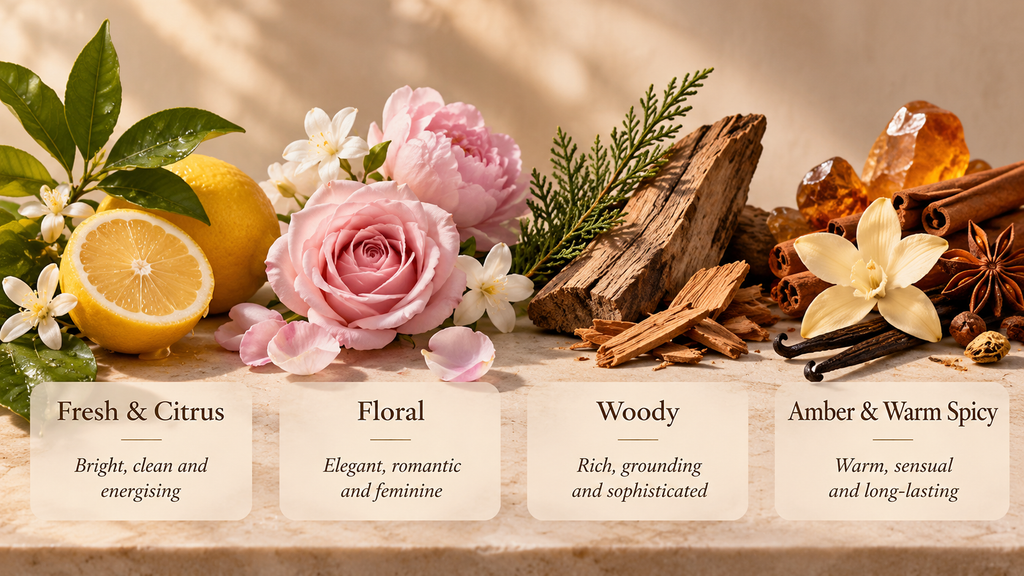
Fragrance families group perfumes by their overall scent character. Learning a few common families makes it easier to narrow down your options without memorising dozens of ingredients.
Fresh and Citrus
Fresh fragrances commonly feature citrus, green, aquatic or clean-smelling accords. They can create a bright, airy impression and are popular choices for daytime wear.
Look for notes such as:
- Bergamot
- Lemon
- Grapefruit
- Mandarin
- Green leaves
If you prefer light, crisp scents rather than rich or sweet perfumes, this is a useful family to explore.
Floral
Floral fragrances are built around the character of flowers. Depending on the composition, they can feel delicate and powdery, fresh and airy, or rich and expressive.
Common floral notes include:
- Rose
- Jasmine
- Peony
- Orange blossom
- Tuberose
Floral fragrances are not limited to one gender or occasion. Their overall character depends on how the floral notes are combined with the rest of the composition.
Woody
Woody fragrances often have a dry, earthy, warm or smooth character. They may feel understated or deep depending on the ingredients and composition.
Common woody notes include:
- Sandalwood
- Cedarwood
- Vetiver
- Patchouli
- Oakmoss
If you enjoy earthy, grounded scents, woody fragrances are worth exploring.
Amber and Warm Spicy
Warm fragrances often combine sweet, resinous, spicy or balsamic accords. They can feel cosy, rich and enveloping.
Look for notes such as:
- Vanilla
- Amber accords
- Cinnamon
- Cardamom
- Tonka bean
- Benzoin
These fragrances are often associated with evening wear and cooler weather, although lighter compositions can work in many settings.
Aromatic
Aromatic fragrances frequently use herbs and green notes to create a fresh, crisp or slightly earthy character.
Common examples include:
- Lavender
- Rosemary
- Sage
- Basil
- Clary sage
Aromatic notes can appear in fresh, woody and other fragrance styles, so this family often overlaps with others.
Beginner tip: If you’re unsure where to start, choose two families that sound appealing and explore a small selection from each. Comparing different styles is often more useful than testing many perfumes that smell similar.
3. Learn What Top, Middle and Base Notes Mean
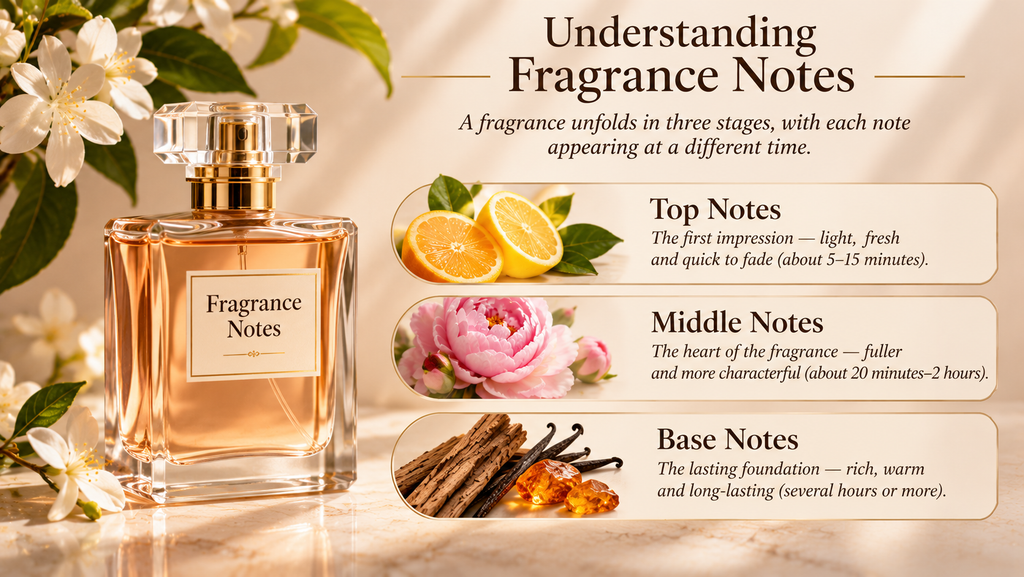
Perfume descriptions frequently mention top notes, middle notes and base notes. These terms describe how a fragrance is commonly perceived as it develops after application.
Top Notes: The First Impression
Top notes are the scents you notice shortly after spraying a perfume. They often create the initial impression and gradually become less noticeable.
Common examples include:
- Bergamot
- Lemon
- Orange
- Light fruits
- Fresh herbs
A fragrance may smell bright and citrusy at first, even if it later becomes warmer or woodier.
Middle Notes: The Heart of the Fragrance
Middle notes, also called heart notes, become more apparent as the opening settles. They help establish the fragrance’s main character.
Common examples include:
- Rose
- Jasmine
- Lavender
- Geranium
- Spices
The heart of a perfume can make it feel floral, aromatic, fruity or spicy.
Base Notes: The Lasting Impression
Base notes provide depth and contribute to the scent that remains as the fragrance develops.
Common examples include:
- Sandalwood
- Cedarwood
- Vanilla
- Musk
- Patchouli
- Amber accords
A fragrance’s opening may be very different from its later dry-down. This is why choosing a perfume after only one quick spray can be misleading.
A note list is a helpful guide, but it doesn’t guarantee a perfume will smell exactly like the individual ingredient. The overall composition matters.
4. Understand Eau de Toilette, Eau de Parfum and Parfum
One of the most common questions beginners ask is whether they should buy Eau de Toilette or Eau de Parfum.
These labels describe different fragrance formats and are broadly associated with differences in fragrance concentration. However, they don’t guarantee a specific number of hours of wear or how strongly a perfume will project.
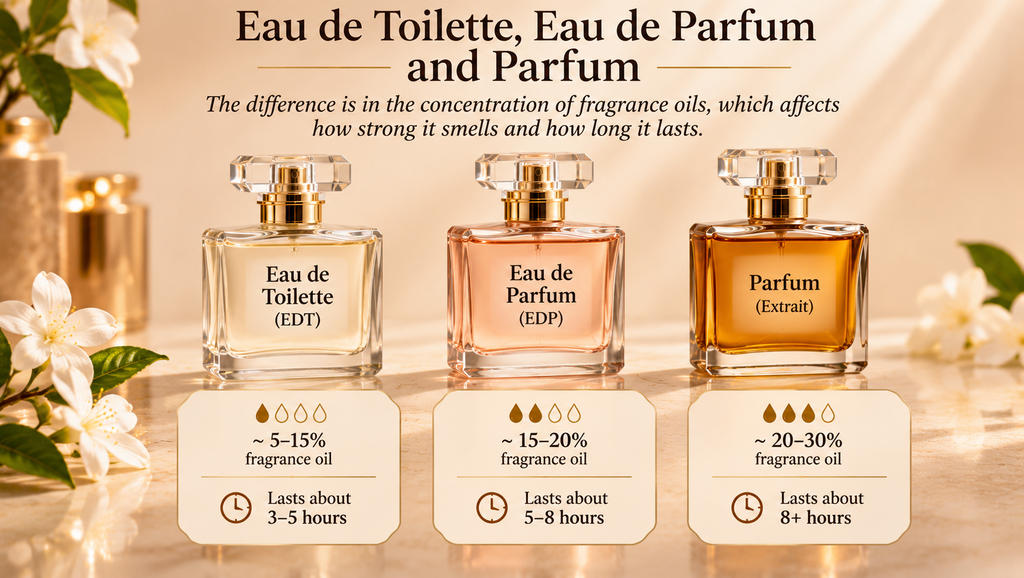
| Fragrance type | General character |
|---|---|
| Eau de Cologne (EDC) | Often light and refreshing |
| Eau de Toilette (EDT) | Often lighter in overall presence |
| Eau de Parfum (EDP) | Often a fuller fragrance format |
| Parfum / Extrait | Often a more concentrated format |
Which One Should a Beginner Choose?
There is no universally correct concentration for a first perfume.
Consider what you actually prefer:
- Choose an EDT if you enjoy a lighter fragrance presence.
- Consider an EDP if you prefer a fuller scent experience.
- Explore parfum if you enjoy more concentrated fragrance formats and have found a scent you genuinely like.
- Consider a body mist if you prefer a softer, more casual fragrance experience.
Don’t assume that a higher concentration automatically means better performance. The formula, ingredients, application and individual experience all influence how a fragrance wears.
5. Think About When You Will Wear Your Fragrance
A fragrance that feels perfect for an evening event may not be the one you want to wear every morning.
Before buying, think about your everyday routine and the environments in which you’ll wear it.
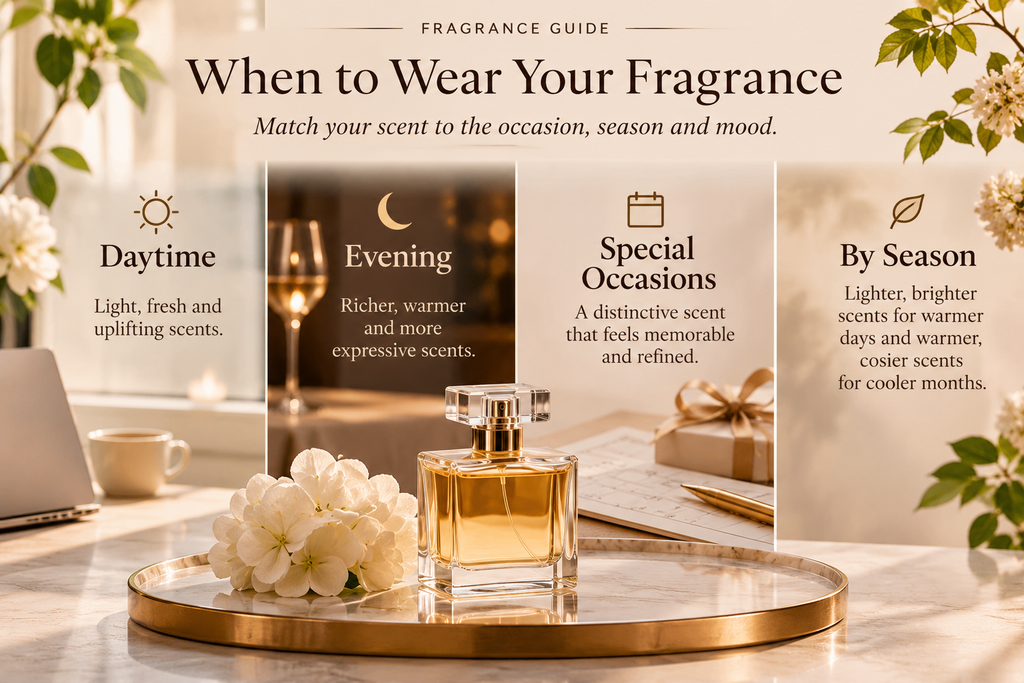
Everyday Wear
For daily use, consider fragrances that feel comfortable and easy to wear. Fresh, citrus, soft woody and lighter aromatic styles can be good starting points.
Work and Professional Situations
For offices and shared spaces, a restrained fragrance is often a considerate choice. Look for something that remains relatively close to the wearer rather than filling the room.
Evening and Special Occasions
If you want something with a warmer or richer character, explore amber, woody, spicy or floral compositions.
Warm and Cold Weather
Temperature can influence how a fragrance is perceived. Some people prefer fresher, lighter styles in warm conditions and richer compositions in cooler weather.
These are starting suggestions, not strict rules. A fragrance you love isn’t automatically unsuitable just because it doesn’t fit a traditional seasonal category.
6. Test a Perfume Before Buying a Full Bottle
This is one of the most important steps when choosing your first fragrance.
A perfume can smell different on a testing strip and on your skin. It also develops over time, so the first impression is only part of the experience.
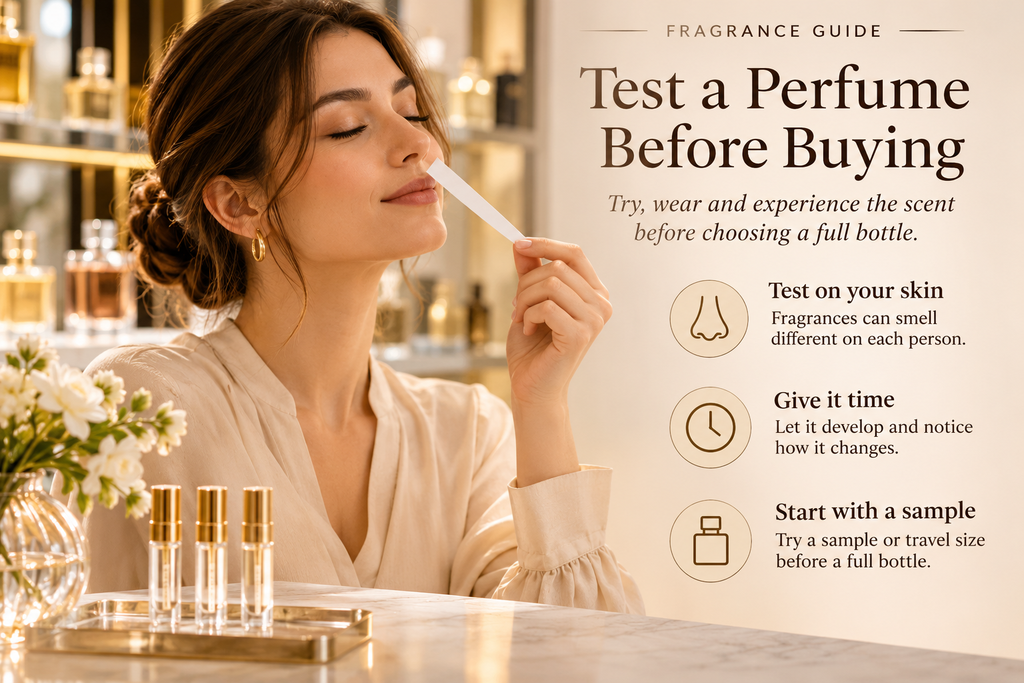
Follow this simple testing process:
Step 1: Start With a Testing Strip
Spray a small amount onto a fragrance testing strip to understand the initial scent. This helps you narrow down options before applying anything to your skin.
Step 2: Choose Only a Few Favourites
Avoid testing too many fragrances at once. Comparing two or three options is a more manageable way to notice their differences.
Step 3: Test Your Favourites on Skin
Apply a small amount to your skin, following the product instructions. Avoid rubbing the area after application.
Step 4: Give the Fragrance Time
Notice how it smells after the opening settles. Check whether you still enjoy the fragrance later rather than deciding immediately.
Step 5: Wear It Through a Normal Day
If possible, try a sample or travel-size version before purchasing a full bottle. This gives you a better idea of how the fragrance fits your routine.
A perfume you enjoy after several hours may be a better choice than one that makes an impressive first impression but becomes unpleasant later.
7. Choose a Sample Before Buying a Full Bottle
If you are new to fragrance, buying a large bottle right away isn’t always the smartest move.
Samples, discovery sets and travel sprays can help you explore different fragrances without committing to a full-size purchase.
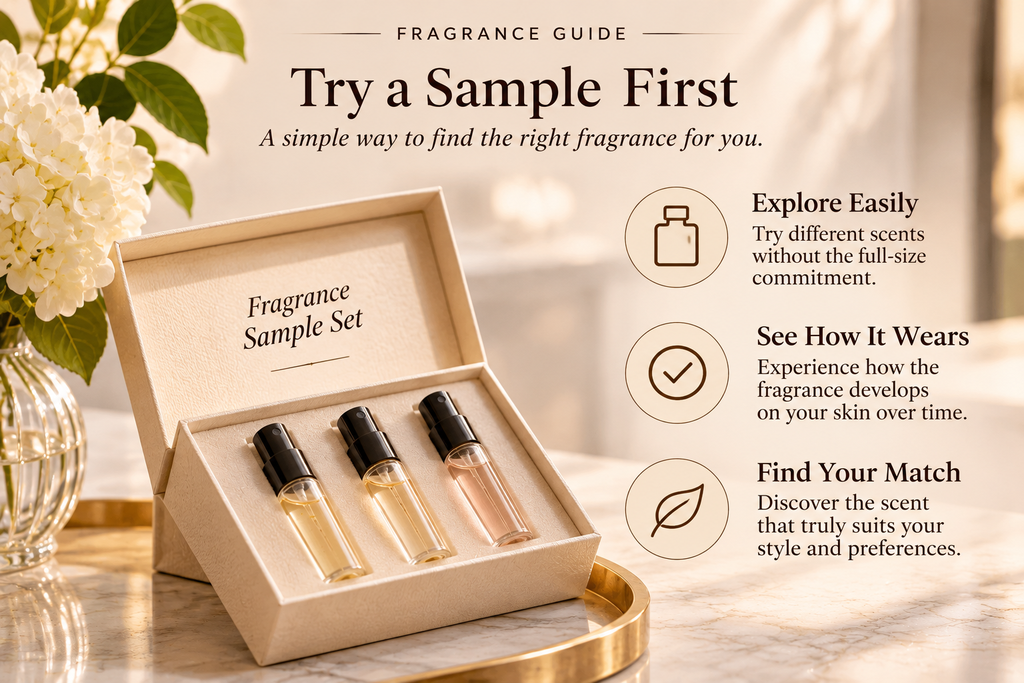
They are especially useful when:
- You’re unfamiliar with a fragrance family.
- You are comparing several perfumes.
- You want to test a fragrance over multiple days.
- You’re unsure whether you will enjoy wearing it regularly.
A smaller format can also be practical if you only plan to wear a fragrance occasionally.
Once you find something you genuinely enjoy, you can decide whether a larger bottle makes sense.
8. Don’t Choose a Perfume Based Only on Popularity
Popular fragrances can be useful starting points, but popularity doesn’t mean a perfume will suit everyone.
A fragrance may be widely praised because of its composition, branding, marketing or cultural popularity. Your own preferences and the environments in which you wear it still matter more.
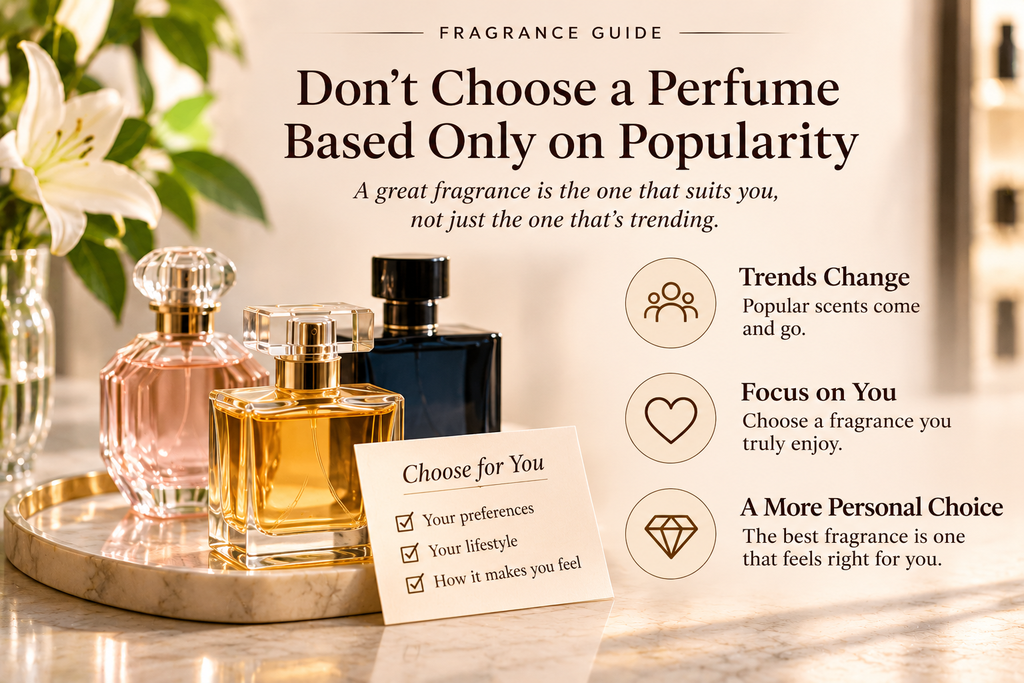
Be cautious about choosing a perfume simply because:
- It is currently trending.
- A celebrity wears it.
- Someone else receives compliments when wearing it.
- An online review describes it as a must-buy.
- It has a high concentration or high price.
Use reviews and recommendations to discover options, then test the fragrance yourself whenever possible.
9. Set a Budget Before You Shop
Fragrance prices vary considerably. Designer perfumes, niche releases, independent brands and more affordable options all offer different choices.
A higher price does not automatically mean a fragrance will suit your preferences best.
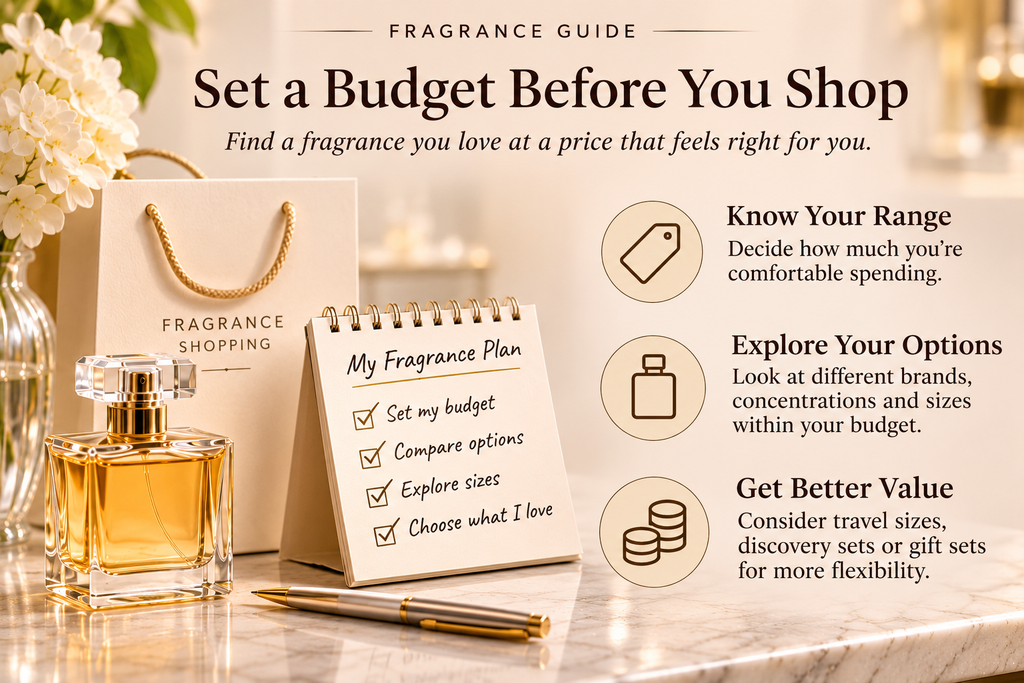
Before shopping:
- Decide how much you are comfortable spending.
- Compare prices from reputable retailers.
- Check the bottle size and price per millilitre.
- Look for sample or discovery options.
- Avoid buying a full bottle simply because it is discounted.
If you’re purchasing online, make sure the seller is reputable and the product is authentic. Be cautious of unusually low prices from unknown sellers.
10. Common Mistakes to Avoid When Buying Your First Perfume
A few simple mistakes can lead to an expensive bottle you rarely use.
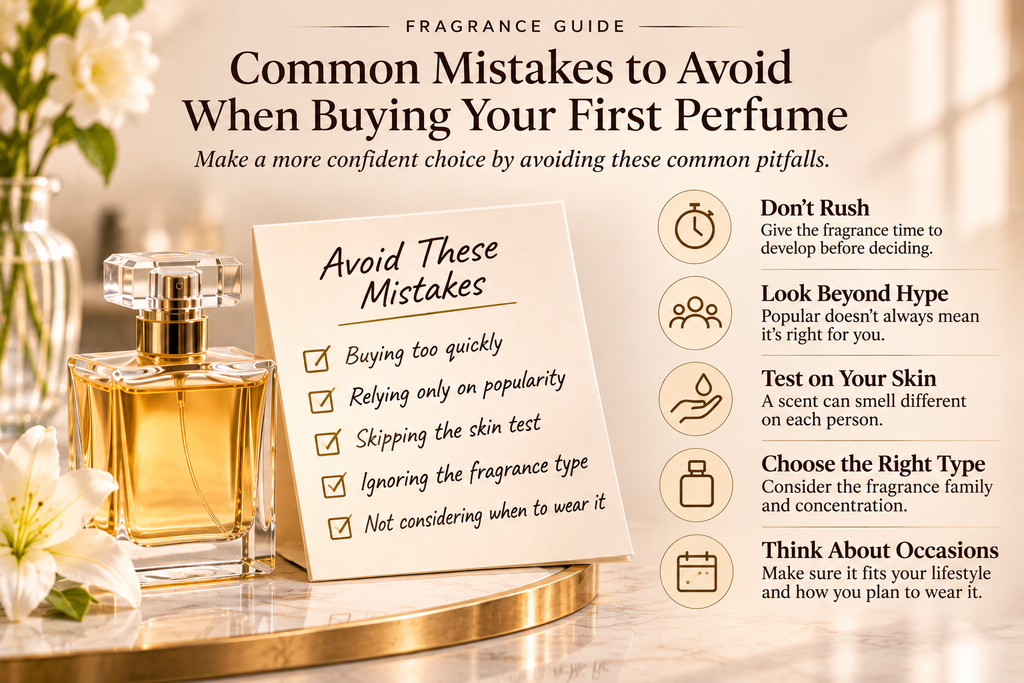
Buying After One Spray
A fragrance changes as it develops. Give it time before deciding.
Testing Too Many Perfumes at Once
Too many competing scents can make it difficult to distinguish what you actually like.
Choosing Only by the Opening
The first impression isn’t the whole story.
Following Trends Blindly
A popular perfume may not suit your preferences, routine or environment.
Assuming Expensive Means Better
Price alone cannot determine whether a fragrance is right for you.
Buying a Large Bottle Too Soon
Try a sample or smaller format when you’re uncertain.
Ignoring Personal Comfort
If a fragrance causes irritation, discomfort or headaches, stop using it. Fragrances can cause reactions in some people. If you have a history of fragrance sensitivity, seek appropriate advice before trying new products.
11. A Simple Checklist for Choosing Your First Fragrance
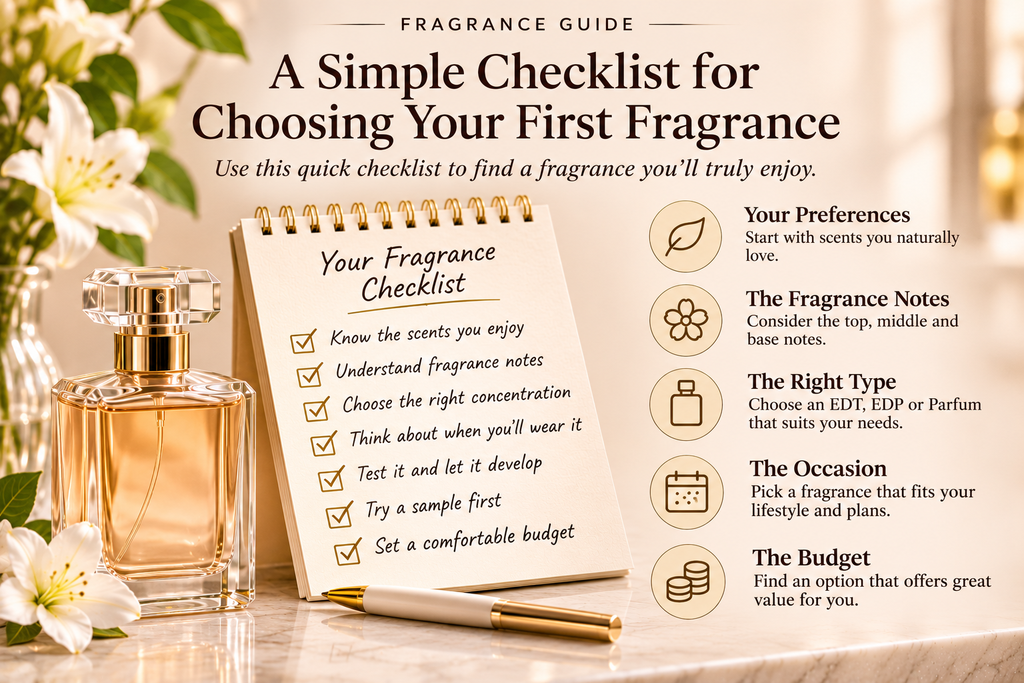
Before making your purchase, ask yourself:
- Do I enjoy the fragrance when I first smell it?
- Do I still like it after the opening settles?
- Does its overall character suit my preferences?
- Can I imagine wearing it regularly?
- Is it appropriate for the places where I spend time?
- Have I tested it on skin or tried a sample?
- Does the price fit my budget?
- Am I buying it because I genuinely like it, rather than because it is popular?
If you can confidently answer these questions, you’re in a much better position to make your choice.
12. Frequently Asked Questions
What Is the Best First Perfume for a Beginner?
There is no single best first perfume for everyone. Fresh, citrus, soft floral and light woody fragrances can be approachable starting points, but personal preference should guide the decision. Try samples from different fragrance families before choosing.
Should I Buy Eau de Toilette or Eau de Parfum for My First Fragrance?
Neither is automatically better. Eau de Toilette is often associated with a lighter fragrance format, while Eau de Parfum is commonly a fuller format. Compare the actual fragrances rather than choosing based on the label alone.
How Many Perfumes Should I Test at Once?
Start with two or three options. This makes it easier to compare them without overwhelming your sense of smell. Use testing strips first, then try your favourites on skin.
How Long Should I Wait Before Buying a Perfume?
Ideally, wear a sample through a normal day and see whether you continue to enjoy it. You don’t need to decide immediately after the first spray.
What Are the Most Beginner-Friendly Fragrance Families?
Fresh, citrus, soft floral and light woody styles can be useful starting points. However, a beginner can enjoy any fragrance family. The best option is the one that suits their taste.
Is an Expensive Perfume Always Better?
No. Price doesn’t guarantee you will prefer a fragrance or that it will perform better for you. Consider the fragrance, formula, personal comfort and value rather than price alone.
How Do I Find My Signature Scent?
Explore fragrances you naturally enjoy, test a few options over time and notice which ones fit your routine. Your preferences may change, so you don’t need to find one permanent signature scent right away.
13. Final Thoughts
Choosing your first fragrance is less about finding the most expensive or popular bottle and more about discovering what you enjoy wearing.
Start with familiar scent preferences, explore a few fragrance families, learn how notes and concentrations work, and give a perfume time to develop before deciding.
Most importantly, don’t rush. A sample, a thoughtful comparison and a little patience could help you find a fragrance that feels right for you.
The best first fragrance is not the one everyone else recommends. It’s the one you genuinely look forward to wearing.
Editorial references
- DermNet — Fragrances and perfumes
- Ulta Beauty — How to Find Your Signature Perfume Scent
- Oriflame — Your Beginner’s Guide to Fragrance